Establishing UX at Scale

GOALS, CHALLENGES & OBJECTIVES
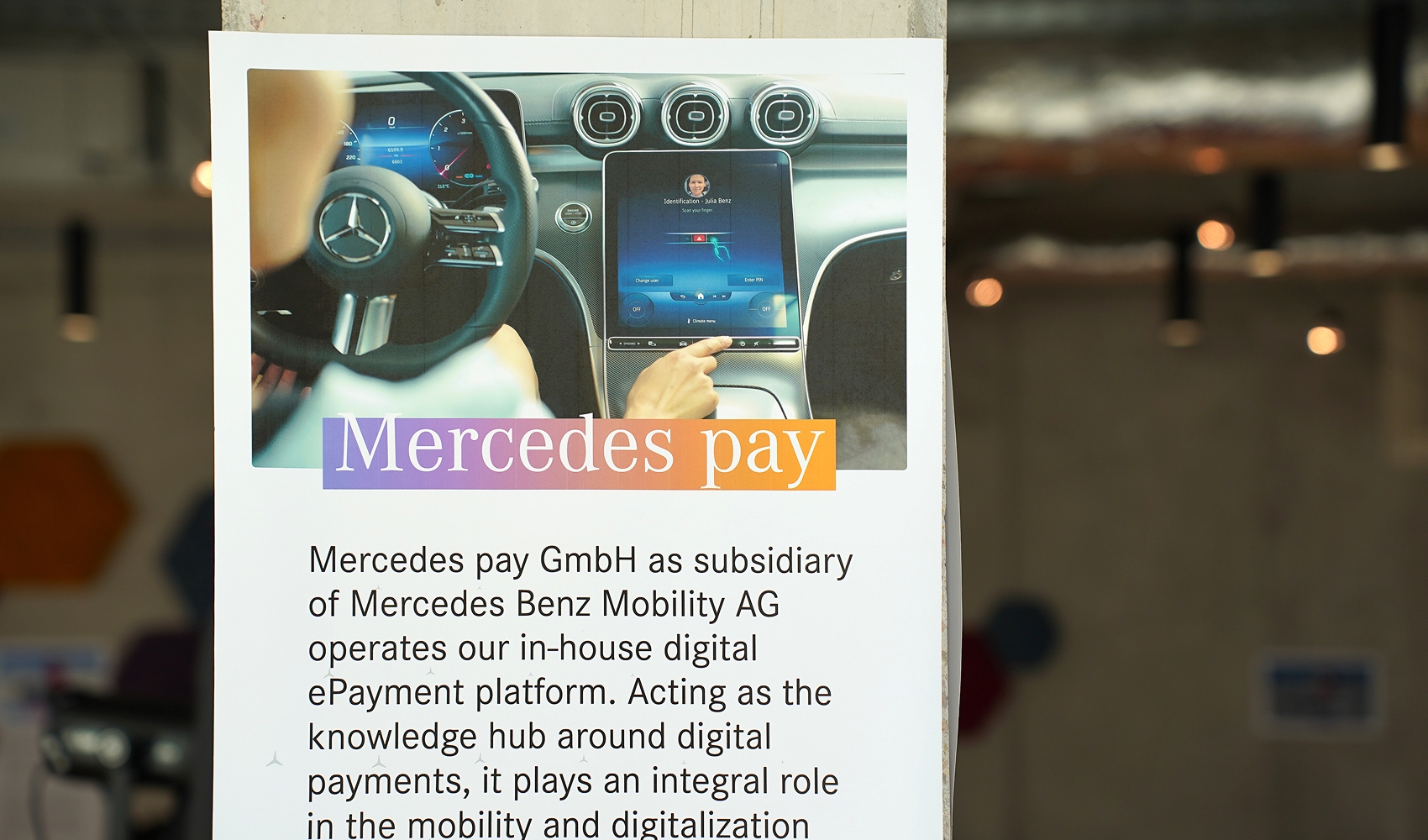
Mercedes pay is Mercedes-Benz's digital payment platform. In simple terms, it securely connects customers' payment methods (like Visa, Mastercard, or bank accounts) to Mercedes services, in-car features and partner offerings, while navigating the complex rules of each country's banking and compliance systems.
When I joined, the platform powered around 10 products across 40 markets, reaching roughly 70 million customers and handling ~500k transactions annually. Despite this scale, the way Mercedes pay approached user experience was reactive, inconsistent and often delayed, with UX typically involved after key design decisions were made.
The need for change became urgent. Competitors were showcasing advanced, user-friendly digital services at major automotive shows and complaints from customers and dealership sales teams were rising across most markets. Product owners knew they were making design decisions without user validation, much like the business knew it needed UX but wasn't sure what “good UX” meant in practice.
My mission was clear: design and implement a structured, scalable UX research practice that would shift the organisation from Level 2 (“Limited”) to Level 4 (“Structured”) on the UX Maturity Model, embedding user insights into the product lifecycle from concept to launch.
Objectives
- Advance UX maturity: Move from reactive, post-launch feedback to structured, proactive research embedded at the concept stage.
- Create a scalable research process: Define a repeatable workflow that could be applied to all products. Establish continuous research practices.
- Build internal capability: Forge close relationships with research departments and upstream product teams.
- Improve stakeholder alignment: Foster cross-functional collaboration between product, design, research and development teams.
- Establish measurable UX impact: Set up KPIs to track usability, adoption and customer satisfaction over time.
- Reduce risk and rework: Validate designs early to avoid costly fixes after launch.
- Strengthen competitive position: Deliver products with modern, trustworthy and market-leading user experiences.
Initial Challenges
- Driving alignment in a fragmented ecosystem: Harmonising user experience across diverse subsidiaries and business units to create a unified brand presence.
- Securing investment for UX maturity: Influencing leadership to recognise design as a business growth lever rather than a delivery function.
- Balancing speed with strategic insight: Embedding research into fast-paced delivery cycles without compromising depth or accuracy.
- Turning insight into action: Ensuring research outcomes directly shaped product strategy, not just feature design.
- Innovating within regulated complexity: Delivering engaging, compliant user experiences in an industry bound by safety, legal and multi-platform requirements.
Stakeholders & Reporting
Report
Raul Lopez, Head of Payment-Related Products.
Key stakeholders
The 10 product owners, Product Board, Consumer Product tribe, MBition.
Initiative champions
Initiated by myself, supported via Raul, partnered with MBition.


DISCOVERY
Discovery followed the typical steps: UX Audit -> Stakeholder mapping -> Process and tool review -> Research and validation.
Audit & Validation
Existing work was scattered across a small internal team, the intranet and occasional MBition studies. Most products lacked meaningful metrics, research was conducted on very small samples (less than 12 participants) and UX was only engaged after a product launch revealed issues.
My goal was to systematically assess the current state of UX practices, identify gaps and establish a foundation for embedding UX into product development.
I conducted a comprehensive UX audit across all Mercedes pay products using Nielsen Norman Group's UX Maturity Model as a framework. This involved mapping all existing research sources, workflows, tools and outputs and evaluating them against the stages of UX maturity. I then defined realistic UX personas and a UI toolkit to educate and arm product owners. A key action was establishing a structured partnership with MBition, integrating them into the UX process beyond their previous QA-focused role.
The audit revealed that the business had no reliable understanding of its users, no UX personas and insufficient metrics to guide design. The assessment confirmed that Mercedes pay was at Stage 2 (“Limited”) on the NN/g UX Maturity Model. It clarified the path to Stage 4 (“Structured”), set measurable objectives for the UX program and demonstrated strong internal appetite for more systematic UX practices, laying the groundwork for embedding research across all products.
Process & tooling
Time for research results, as well as developer handover were significant, weeks and weeks of work. It was easy to see that the outdated Sketch and Protopie with no process were slowing things down; prototyping and developer handover was slow and cumbersome, often relying on static PDFs or JPEGs. This limited the ability to run usability tests or engage other stakeholders in workshops, slowing down the pace of product improvement.
My goal was to modernize design tools and workflows, creating a repeatable, scalable process that allowed design, development and research to collaborate efficiently while maintaining enterprise-level security.
I initiated an early rollout of Figma, setting up all new design and handover processes, including documentation, enterprise setup and a shared design system. This replaced Sketch and manual handovers, enabling the creation of clickable prototypes for usability testing. I also trained team members and secured buy-in from leadership, navigating bureaucratic hurdles to ensure adoption.
Efficiency improved dramatically: design handovers and prototype usability testing went from weeks to immediate execution. Research and design quality increased, with faster, more accurate testing and immediate feedback loops. The new process also enabled direct involvement in an exclusive R&D project, establishing a foundation for scalable, repeatable UX practices across all Mercedes pay products.
Problems solved
Research Accessibility & Frequency
- Before: Testing was inconsistent, ad hoc and siloed. Products were rarely validated with real users and insights arrived too late to inform design.
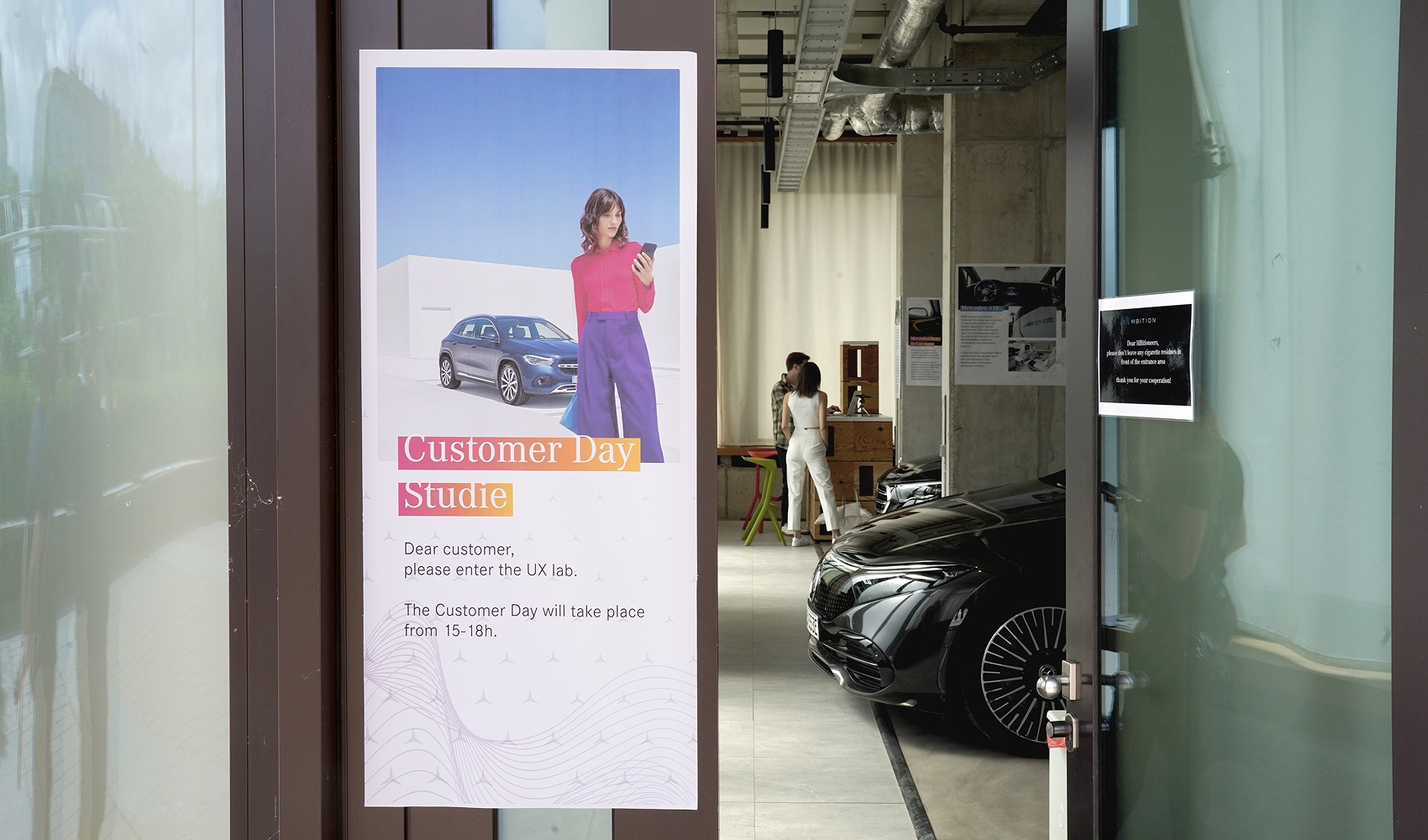
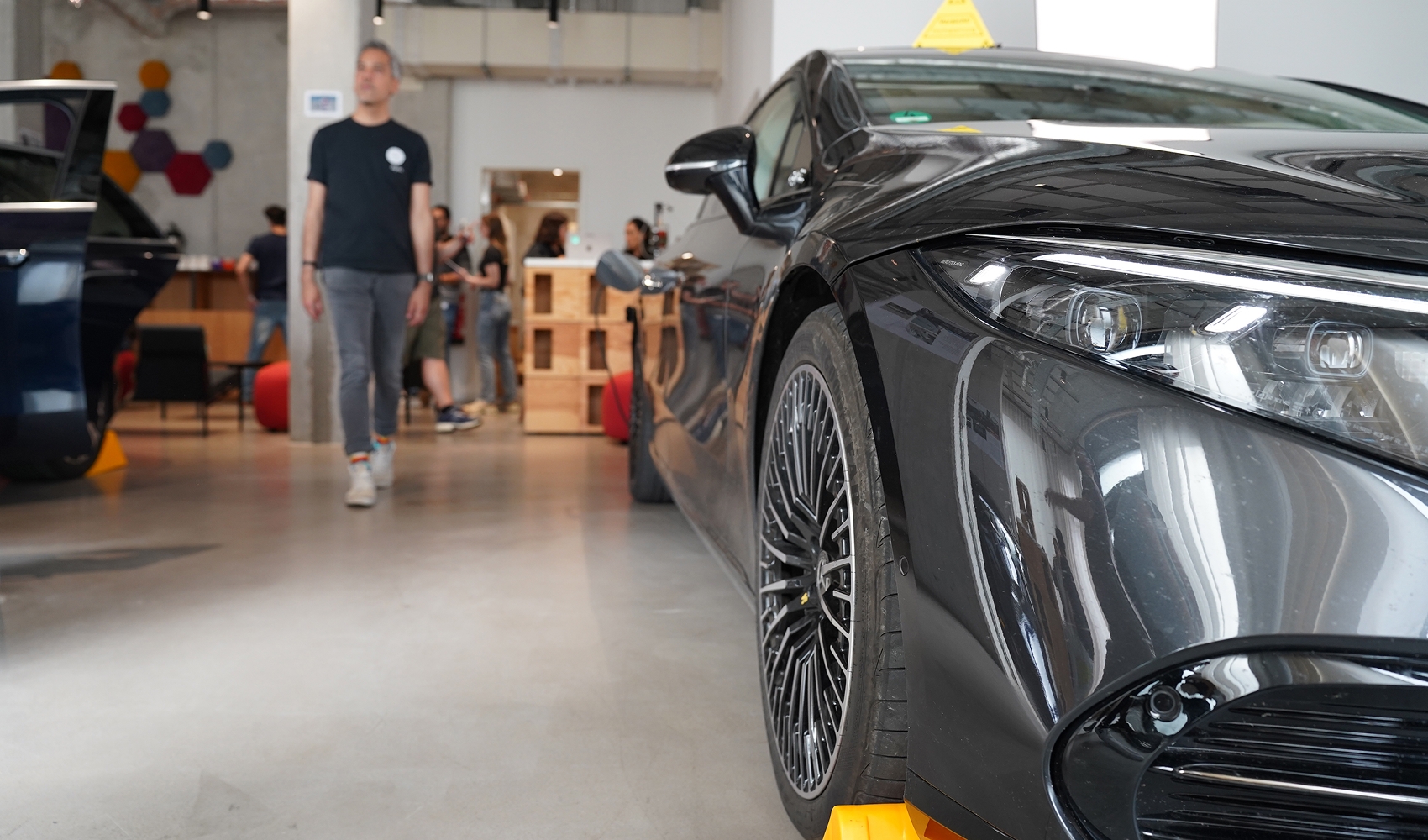
- Solution / After: Introduced a repeatable workflow with MBition, enabling monthly user-testing sessions with real cars and prototypes. Research became a regular, predictable part of the product cycle, integrated with sprint planning and the TRIBES NEED process.
- Impact: All 10 products now benefit from consistent UX validation across 40 markets, creating measurable improvement in design decisions and reducing risk in new product launches.
Assumption-Driven Decisions
- Before: Roadmaps were largely guesswork; products were designed without validated understanding of users, KPIs, or friction points.
- Solution / After: Integrated in-person and remote studies at key product milestones. Findings were shared in sprint planning sessions, influencing design and strategy decisions from conception.
- Impact: The first product designed using this process, an account management function controlling payments across services and countries, was greenlit after successful prototype validation, demonstrating early-stage risk reduction and evidence-based decision making.
Low Stakeholder Engagement
- Before: Research was undervalued; teams were reactive and collaboration with UX was optional. Insights rarely reached decision-makers.
- Solution / After: Established joint planning and reporting with MBition, delivered concise insight briefs, workshopsand quick wins. Simplified processes made research outputs actionable, demonstrating ROI and building trust in UX practices.
- Impact: Stakeholders now proactively schedule research checkpoints; UX is recognized as a strategic function. The business sees measurable improvement in UX maturity, enabling structured, repeatable processes across all teams.
OUTCOMES AND ACHIEVEMENTS
Through this initiative Mercedes pay moved from ad hoc testing and assumption-driven decisions to a culture where research is embedded, accessible and strategically aligned with business goals. The scalable processes and partnerships I built not only raised UX maturity but also ensured that design decisions consistently delivered measurable value. Most importantly, we reintroduced the voice of the user into the product lifecycle, making it a permanent and influential part of how Mercedes pay innovates and grows.
Raised UX maturity from ad hoc to repeatable practice.
- Introduced a scalable research process aligned with OKRs and product tribe structure, now standard across teams.
- Designed a flexible UX toolkit and internal knowledge base that enabled teams to self-serve research methods.
Forged a lasting research partnership with MBition.
- Secured recurring quarterly research slots in MBition's program, embedding Mercedes pay into Mercedes-Benz's broader UX ecosystem.
- Delivered insights from in-person testing at MBition's user-workshop days that directly shaped UI and product features.
Shifted decision-making from assumptions to evidence.
- Embedded research checkpoints into sprint planning and product lifecycles, leading to faster validation and reduced rework.
- Influenced a multi-million-euro analytics initiative by ensuring UX requirements were captured from the start.
Elevated UX as a business driver, not a support role.
- Presented results and new workflows to the Product Board, securing leadership buy-in.
- Demonstrated ROI through quick wins and highly actionable reports, inspiring proactive scheduling of research across teams.
Built cross-functional culture around user-centered design.
- Conducted workshops and insight briefings that educated stakeholders and drove collaboration.
- Created clear UX KPIs tied to company OKRs, embedding UX into strategic conversations.
When my 18-month contract concluded, the research integration was no longer experimental, but a sustainable practice embedded in strategy, culture and delivery; a legacy that continues to shape Mercedes pay's growth.
RESPONSIBILITIES
I was the sole UX Designer dedicated to Mercedes pay on this project, effectively leading design and research efforts end to end.
- Leadership: aligned product, design, and research stakeholders to drive adoption of UX practices.
- Research: initiated, planned, and executed continuous user research and in-person usability tests.
- Design: created wireframes, user flows, and high-fidelity prototypes grounded in real-user feedback.
- Strategy: shaped the UX strategy to balance user needs with business objectives.
- Education: facilitated workshops and presentations to upskill stakeholders in design thinking and research literacy.
- Operations: developed repeatable processes and templates to scale efficiency and visibility.
- Culture: championed a user-first mindset through ongoing advocacy and clear communication.